El Psy Kongroo: Why Steins;Gate's Time Travel Might Actually Be Scientifically Defensible
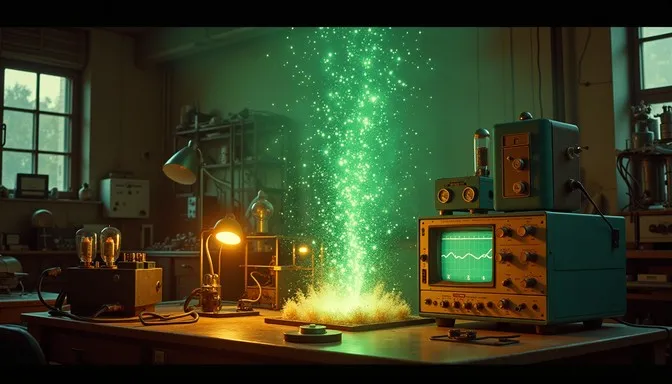
Photo: vintage microwave laboratory physics experiment dramatic lighting, via images.stockcake.com
Every fandom has its sacred text. For time travel nerds, it's usually Primer or Dark. But there's a strong—and increasingly vocal—contingent that argues Steins;Gate belongs in that conversation. And unlike most anime science (we're looking at you, every show where someone yells quantum and a portal opens), Steins;Gate's worldline theory has actual legs.
So today, we're doing what every good US nerd does on a Saturday: over-analyzing fiction with half-remembered physics knowledge. Let's get into it.
The Core Mechanic: Worldlines, Not Timelines
First, terminology. Steins;Gate doesn't use "timelines." It uses worldlines—and that distinction matters more than you'd think.
In the show's framework, a worldline is a single complete history of the universe. Okabe doesn't travel through time in the Back to the Future sense; his memories shift between worldlines when the past is altered. This is functionally very close to the many-worlds interpretation of quantum mechanics, first proposed by Hugh Everett in 1957.
Everett's idea: every quantum event branches reality. No collapse, no paradox—just an ever-growing tree of parallel histories. Sound familiar? When Okabe sends a D-Mail, the world doesn't "change." A different branch becomes the one he's observing. His Reading Steiner—the ability to retain memories across worldline shifts—is the show's one big fictional liberty, and honestly, it's a small price to pay.
Convergence: The Franchise's Secret Weapon
Here's where Steins;Gate gets clever, and where most critics check out. Worldlines aren't infinitely malleable. They converge—certain outcomes (like Makise Kurisu's death) are attractor fields that reality keeps snapping back to, no matter what Okabe changes.
Is that scientifically defensible? Weirdly, kind of. Physics has concepts like attractors in dynamical systems and path dependence in complex systems. The show essentially argues that worldlines are basins of attraction—small perturbations get smoothed out, and history reasserts itself. It's not rigorous, but it's internally consistent, which puts it ahead of 90% of the genre.
Compare that to, say, the timey-whimey hand-waving of LOST, where the writers were clearly making it up week to week. Steins;Gate laid out its rules in episode one and never broke them. That's rarer than you think.
The Obvious Objection: The Time Machine
Fine, let's address the DeLorean in the room. Sending physical matter back in time (the Time Leap Machine, the later time machine) is the part with zero real-world support. Closed timelike curves can exist in general relativity—Kurt Gödel's rotating universe solutions, wormhole-based ideas like Kip Thorne's—but they require exotic matter with negative energy density, and the whole thing probably self-destructs via Hawking's chronology protection conjecture.
But here's the thing: Steins;Gate treats physical time travel as the inferior method. The D-Mails—data sent to the past via altered black hole physics—are the workhorse. Information-only time travel is philosophically and physically the least offensive version of the trope. The show knows this. It put the silly stuff on the back burner and built its drama on the plausible-adjacent stuff.
Why This Matters for the Fandom Wars
If you've ever wandered into r/steinsgate or a r/anime rewatch thread, you know the arguments: Can Okabe change the past? Is the Beta worldline "real"? Did Suzuha's explanation hold up? The reason these arguments never die is because the show's rules are tight enough to argue about. That's the mark of great worldbuilding. You can't have a forty-page Reddit thread about the mechanics of, say, The Flash.
And the franchise doubled down: Steins;Gate 0 built an entire companion story on the worldline the original rejected, exploring the attractor field Okabe fled from. That's commitment to the bit that most franchises wouldn't attempt.
The Verdict
Is Steins;Gate hard science fiction? No. Is it scientifically literate fiction that respects the audience enough to build consistent rules and stick to them? Absolutely. The worldline convergence model borrows from Everett, nods to chaos theory, and sidesteps the grandfather paradox entirely by making paradoxes impossible—you can't kill your grandfather in a worldline where you were born.
It's the rare time travel story you can argue about for thirteen years and counting without it collapsing. The Organization would be proud.
El Psy Kongroo.
Got a physics degree and a bone to pick with our many-worlds take? The comments are open. Bring citations.