Hope Is a Setup: The Nitroplus Playbook for Breaking Your Heart on Purpose
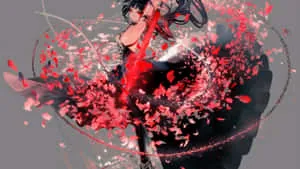
Photo: dramatic red petals falling dark anime style atmosphere, via mrwallpaper.com
Every fandom has its origin trauma. For a certain generation of anime fans in the US, it was episode three of a certain magical girl show, when a red-haired girl with a spear got eaten on camera while her best friend screamed. If you know, you know. If you don't, congratulations—you still have one bad day ahead of you.
That moment didn't come out of nowhere. It was the culmination of a philosophy that Nitroplus had been sharpening for over a decade before the rest of the industry caught on. Call it the Urobuchi Rule: the happier the character, the shorter the runway.
Kill Your Darlings, Then Sell Posters of Them
Most Western writing advice treats 'kill your darlings' as a caution about self-indulgence. Nitroplus treated it as a business model. Go back through the catalog—Saya no Uta, Phantom of Inferno, Demonbane, the Chaos; franchise—and you'll find the same structural move repeated with variations: establish a warmth, a routine, a person worth rooting for, then detonate it with the calm precision of a bomb tech.
The genius isn't the death. Death is cheap; Hollywood kills dogs by the dozen. The genius is the calibration of hope. Urobuchi's scripts don't lure you in with darkness and then spring the trap. They lure you in with sunlight. The wish is granted. The team is assembled. The episode ends on a laugh track of genuine joy. And somewhere in the writer's room, a man nicknamed 'the Urobutcher' is timing his watch.
Why American Audiences Never Saw It Coming
Here's the part I find genuinely interesting: this style of storytelling shouldn't work on us, and it works on us spectacularly.
American pop culture is built on the triumphant arc. Superman saves the city. The Avengers assemble. Even our bleakest prestige dramas usually let the protagonist limp away with some hard-won truth. We are a culture raised on the promise that suffering is a setup for payoff. Narrative suffering is transactional.
Nitroplus storytelling is not transactional. It's atmospheric. The despair in Madoka isn't punishment for hubris or a lesson learned—it's simply the physics of the world, as indifferent as gravity. For an audience trained to read pain as foreshadowing of triumph, a story where pain is just... pain? That's a system shock. It's why American fans didn't just watch Madoka; they processed it, in group therapy threads and 4,000-word Reddit posts at 2 a.m.
We didn't have antibodies. We still don't.
The Contract Nobody Reads
There's a meta-joke buried in all of this that I love: Nitroplus's most famous story is literally about a wish-granting entity that offers hope at a hidden price, and the audience keeps signing. Every time a new collaboration drops—a game, an anime, a gacha crossover—the fandom lines up knowing the odds. We've read the contract. We sign anyway.
That's not masochism. That's trust. We keep coming back because the despair is earned—it's the shadow cast by characters we genuinely love, and you can't cast a shadow without light. The Urobutcher doesn't hate his darlings. He loves them enough to make their loss mean something. That's rarer than it sounds.
What Western Writers Could Steal (Please, Steal This)
If there's a lesson here for the US industry elbow-deep in superhero reboots, it's this: weaponize hope, not just stakes. Audiences can smell a fake-out death. What they can't smell is a story brave enough to make them love something before taking it—and honest enough not to undo it in the sequel.
Stop asking 'what does the audience fear?' Start asking 'what does the audience hope for, specifically, right now, in this scene?' Then be very, very quiet about what you plan to do with it.
Just—maybe give us one happy ending per decade. We're fans, not hostages.
El psy kongroo. And keep your wishes specific.